
How to Write a Fashion Management Assignment: Tips, Structure & Examples
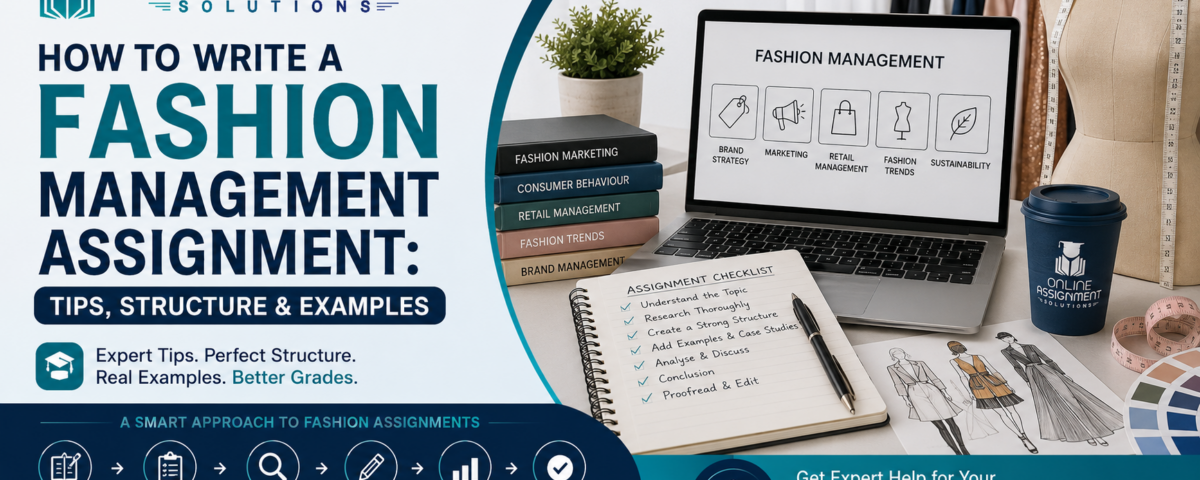
Fashion is way more than clothes and trends. It is a global industry that brings together creativity with business strategy, marketing, retail management, merchandising, supply chain management, branding, and consumer behaviour. Fashion management students in universities in the UK should be aware of the creative and commercial sides of the fashion industry. In their studies, they complete essays, case studies, research reports, presentations, marketing plans, dissertations, and business projects, which test their analytical and decision-making skills.
Fashion management assignments can be very difficult because they are not just about talking about fashion trends. Students will evaluate luxury brands, analyse consumer behaviour, assess retail strategies, and apply management theories to real-world fashion businesses. Universities in the UK also expect students to support their assignments with academic research, industry reports, and practical examples from leading fashion companies.
If you are confused about how to go about your assignment or wish to improve your grades, this step-by-step guide will tell you how to structure a fashion management assignment, how to do effective research, how to apply relevant business models, and how to avoid common mistakes.
What Is A Fashion Management Project
A fashion management assignment is an academic task where students are asked to research the business and management issues in the fashion industry. It looks at the business of fashion brands, marketing of products, supply chain management, building customer relationships, and reacting to the changing patterns of consumer demand.
You might be asked to fill in the following:
- Fashion Business News
- Case study assignments
- Marketing plans
- Brand analysis
- Reports on retail strategies
- Essays on Consumer Behaviour
- Sustainability Report
- Research articles
- Chapters of the thesis
Most assignments ask students to apply management theory and knowledge of the industry, rather than just describe fashion concepts.
Why is a fashion management assignment important?
Fashion management assignments help students gain practical business skills that are essential for careers in fashion retail, luxury brand management, merchandising, buying, marketing, and e-commerce.
These assignments assist students:
- Discover the fashion business environment
- Enhance strategic thinking
- Develop research skills
- Analysis of consumer behavior
- Assess marketing campaigns
- Use business theories
- Increase problem-solving skills
- Enhance your professional communication abilities
These skills are highly appreciated by fashion brands, retailers, and international luxury companies.
Fashion Management Assignment Types
Fashion management courses cover a range of assessments to test a variety of academic and professional skills.
Case Study Projects
Students are working on fashion brands and solving business challenges.
Marketing Plans
The assignments are about the promotion of fashion products, the launch of collections, or digital marketing strategies.
Reports on Brand Analysis
Students assess fashion brand positioning, identity, and performance.
Report on Retail Management
Assignments examine retail operations, customer service experience, merchandising, and sales performance.
Research Project
Students explore current issues in the fashion industry using academic and industry sources.
Dissertation
Final year students carry out independent research in the field of fashion management.
How to Write a Fashion Management Assignment: Step-by-Step Guide
Step 1: Know the Assignment Brief
Be sure to read the assignment instructions carefully before you start your research.
Note: Look for:
- Learning results
- Criteria for evaluation
- word count
- Reference style
- Final submission date
A clear understanding of the brief enables you to focus on the required objectives.
Step 2: Conduct Your Research
Strong fashion management assignments rely on reliable academic and industry research.
Useful sources are as follows:
- Academic Journal
- Books about the fashion business
- Industry reports
- The company’s annual reports
- Fashion mags
- government trade magazines
- Market research reports
- fashion news sites
Current information makes your analysis more relevant.
Step 3: Organize Your Assignment
A logical structure makes your writing easier to read and helps you make your arguments convincingly. Generally, a fashion management assignment consists of the following.
Introduction.
The assignment will describe the topic, its objectives, and scope.
Main text
Please provide research, theories, analysis, and discussion under appropriate headings.
Guidance
Offer evidence-based practical ways forward.
Summary
Summarise the main findings. Restate the main arguments.
Step 4: Fashion and Business Theories Applied
Fashion management assignments require students to apply well-known business and marketing frameworks.
Some common ones are:
- SWOT Analysis
- PESTLE Analysis
- Porter’s Five Forces
- The 7Ps of Marketing Mix
- STP Model, Ansoff Matrix, Consumer Decision-Making Model, Brand Equity Model
These theories are applied to demonstrate critical thinking and analytical skills.
Step 5: Analyze Real Fashion Brands
To support your assignment, use practical examples from leading fashion companies.
Popular brands are as follows:
- Zara
- H&M
- Gucci
- Louis Vuitton
- Chanel
- Burberry
- Nike
- Adidas
- Primark
- ASOS
Discuss how these brands approach marketing, branding, customer engagement, sustainability, or retail operations.
Step 6: Support Your Points with Evidence
All arguments have to be supported by credible evidence.
Employ:
- research in academia
- Fashion industry reporting
- Surveys of consumers
- Financial reports of the company
- Market research
- Government figures.
Evidence-based writing adds value to your assignment and enhances academic credibility.
Step 7: Focus on Critical Thinking
At British universities, students are required to analyse information, not just describe it.
Discuss:
- Company’s strengths and weaknesses
- Advantages of competition
- Opportunities in the market
- Industry challenges
- Consumer behavior
- Sustainability concerns
- Digital transformation
- Strategies for future business
Critical evaluation shows higher-level academic skills.
Step 8. Proper Citation
Most fashion management courses require you to use Harvard referencing.
Make sure you:
- Cite all sources properly.
- Add in-text citations.
- Full list of references required.
- Do not copy. Avoid plagiarism.
To reference correctly is to show academic integrity.
Step 9: Proofread and Edit.
Before you turn in your assignment, check.
- Grammar, Spelling, Formatting
- Cite as
- Clarity of the sentence
- Flow of logic
Avoiding mistakes can be helped by proofreading.
Example Fashion Management Assignment
Topic: Effect of Digital Marketing on Management of Luxury Fashion Brands
A strong assignment could include:
- Introduction to digital fashion marketing
- Literature review on luxury branding
- Analysis of Gucci’s social media strategy
- Application of the Marketing Mix and Brand Equity Model
- Discussion of customer engagement
- Recommendations for future digital campaigns
- Conclusion
The framework shows theoretical knowledge and practical application.
Common Fashion Management Assignment Topics
Students often write about.
- Luxury Brand Management
- Fashion Marketing
- Consumer Behaviour
- Retail Management
- Fashion Buying and Merchandising
- Sustainable Fashion
- Supply Chain Management
- Fashion Entrepreneurship
- Digital Fashion Marketing
- E-commerce in Fashion
- Brand Positioning
- Fast Fashion vs Luxury Fashion
These topics represent the current trends in the global fashion industry.
Common mistakes to avoid as a student
There are many marks lost by students due to avoidable mistakes.
These are:
- Limited research
- Weak assignment structure
- Description rather than analysis
- No real-life examples
- Deprecated References
- Wrong Harvard Referencing
- Grammar errors
- Disregarding sustainability questions
- Plagiarism
- Not answering the question of the assignment
Avoiding these errors greatly improves the quality of the assignment.
How to Write a High-Scoring Fashion Management Assignment
How to get better marks.
- Understand the assignment requirements.
- Research current fashion industry trends.
- Apply recognised management frameworks.
- Analyse real fashion brands.
- Support arguments with credible evidence.
- Focus on critical evaluation.
- Follow Harvard referencing.
- Proofread carefully before submission.
These approaches show a good grasp of academic and professional skills.
Looking for Assistance with Your Fashion Management Assignment?
Fashion management assignments are research-orientated and entail business analysis and knowledge of the global fashion industry. If you have complex case studies, marketing plans, or dissertations to deal with, professional academic help can assist you in producing good-quality and well-structured work.
Online Assignment Solutions provides fashion management assignment help, fashion assignment help, fashion marketing assignment help, retail management assignment help, assignment help UK, online assignment help, coursework help UK, university assignment help, essay writing services in the UK, research paper help UK, and dissertation help UK by experts. Each assignment is written as per UK university standards with the help of a free Turnitin report, a free AI plagiarism report, affordable prices, and support from experienced subject specialists.
Summary
The fashion management assignment requires a combination of academic research, business knowledge, industry awareness, and critical analysis to be successful. Some of the ways you can produce assignments that meet the expectations of UK universities are by using a structured process of writing, applying relevant management theories, using real examples from the fashion industry, and supporting your arguments with credible evidence. Whether you are analysing luxury brands, retail strategies, digital marketing, or sustainable fashion, these steps will help you prepare a professional and high-scoring assignment.
Common Questions
1. What is an assignment on fashion management?
Ans: A fashion management assignment is an academic task where students are asked to analyse fashion businesses, branding strategies, retail management, consumer behaviour, or marketing practices using academic theories and evidence from the industry.
2. Which fashion brands can I use as examples?
Ans: Brands such as Zara, H&M, Gucci, Louis Vuitton, Chanel, Burberry, Nike, Adidas, Primark, and ASOS are popular case study brands, as they provide great examples of branding, retail strategy, and consumer engagement.
3. Relevant management theories for a fashion management assignment?
Ans: Some of the most commonly used are SWOT analysis, PESTLE analysis, Porter’s Five Forces, Marketing Mix (7 Ps), STP Model, Ansoff Matrix, and Brand Equity Model.
4. How do I make my fashion management assignment better?
Ans: Research thoroughly; analyse real fashion companies; support your arguments with academic evidence; use relevant business theories; use Harvard referencing; and proofread your work before submission.
5. Is there any professional help available for my fashion management assignment?
Ans: Yes. We provide professional academic support services for fashion management assignments, case studies, research papers, dissertations, proofreading, and referencing and ensure your work is written to UK university standards.
